
The Complete Guide to E-E-A-T and Its Role in SEO
What Is E-E-A-T?
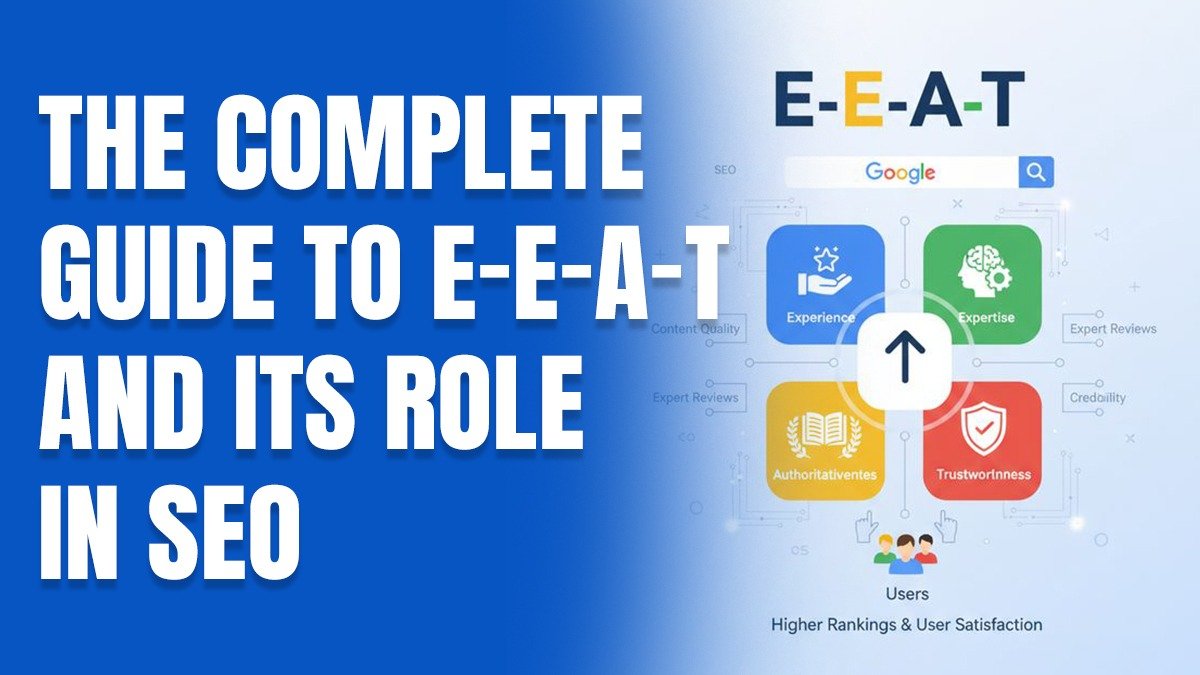
E-E-A-T stands for Experience, Expertise, Authoritativeness, and Trustworthiness. It is a framework used by Google to evaluate the overall quality and reliability of content. While it is not a direct ranking factor, it strongly influences how search engines assess whether a page deserves to appear for important search queries.
This concept is particularly important for websites that provide health, finance, legal, or educational information, where inaccurate advice could significantly impact users.
Understanding the Four Pillars
Experience
Experience refers to firsthand knowledge of a topic. Content created by someone who has personally used a product, performed a service, or encountered a real-world situation often provides greater value than generic information.
Examples include:
- A doctor explaining patient care procedures.
- A traveler sharing personal travel experiences.
- A digital marketer discussing successful campaign results.
- A business owner describing lessons learned from real projects.
Adding authentic experiences helps build confidence among readers.
Expertise
Expertise measures the creator’s knowledge and skills within a specific subject.
Professional qualifications, certifications, years of industry experience, and educational background all contribute to demonstrating expertise.
For example:
- Medical articles should ideally be reviewed by qualified healthcare professionals.
- Financial advice should come from experienced experts.
- Technical tutorials should be written by practitioners with practical knowledge.
Accurate and informative content strengthens credibility over time.
Authoritativeness
Authority reflects how well a website or content creator is recognized within an industry.
Search engines often look for signals such as:
- Mentions from reputable websites.
- High-quality backlinks.
- Industry awards.
- Professional memberships.
- Positive media coverage.
- Strong online reputation.
A website that consistently publishes valuable resources naturally develops authority within its niche.
Trustworthiness
Trust is considered the foundation of quality content.
Visitors should immediately feel confident that your website is safe, transparent, and reliable.
Ways to build trust include:
- Displaying accurate contact information.
- Using HTTPS security.
- Publishing clear privacy policies.
- Providing genuine customer reviews.
- Including author biographies.
- Citing reliable sources when appropriate.
Trustworthy websites encourage users to stay longer and return in the future.
Why This Framework Matters
Search engines aim to deliver the most reliable answers to users. Pages that provide accurate, comprehensive, and well-structured information have a greater chance of ranking well.
For businesses, focusing on credibility also improves customer confidence. Visitors are more likely to engage with websites that clearly demonstrate professionalism and expertise.
Create Helpful Content
Instead of writing solely for search engines, create content that solves real problems.
Ask yourself:
- Does this answer the user’s question?
- Is the information accurate?
- Can readers take action after reading?
- Does the content provide unique value?
Comprehensive guides, tutorials, case studies, and practical examples often perform better than short, generic articles.
Demonstrate Real Expertise
Every article should clearly show who created or reviewed the content.
Consider including:
- Author names.
- Professional qualifications.
- Industry certifications.
- Years of experience.
- Links to professional profiles.
This additional information strengthens confidence in the content.
Build Topical Authority
Publishing multiple high-quality articles around a single subject helps establish authority.
For example, a digital marketing website may cover:
- Search engine optimization.
- Content marketing.
- Technical SEO.
- Local SEO.
- AI search optimization.
- Analytics.
- Website performance.
Internal links between these resources help search engines understand your expertise.
Improve Content Quality
High-quality articles usually include:
- Clear headings.
- Simple language.
- Practical examples.
- Updated statistics.
- Visual elements.
- Frequently asked questions.
- Actionable recommendations.
Avoid publishing content simply to increase page count. Every article should have a clear purpose.
Earn Quality Backlinks
Backlinks remain an important indicator of authority.
Focus on earning links naturally through:
- Original research.
- Industry reports.
- Guest articles.
- Case studies.
- Useful tools.
- Educational resources.
Links from respected websites carry significantly more value than large numbers of low-quality links. To Know More About the Importance of Backlinks read https://thesocialspot.in/what-are-backlinks-and-why-are-they-so-important-for-seo/
Keep Information Updated
Search engines prefer fresh and accurate content.
Review articles regularly to:
- Update outdated information.
- Add recent examples.
- Improve readability.
- Expand explanations.
- Replace broken links.
Consistent updates signal that your website remains active and trustworthy.
Strengthen Technical Performance
A high-quality website should also provide an excellent user experience.
Important technical improvements include:
- Fast loading speed.
- Mobile-friendly design.
- Secure HTTPS connection.
- Clean navigation.
- Structured data implementation.
- Optimized Core Web Vitals.
Technical excellence complements high-quality content.
Encourage Positive User Signals
Satisfied visitors often:
- Spend more time reading.
- Visit multiple pages.
- Share useful articles.
- Return for future information.
- Recommend your website to others.
These behaviors indirectly support long-term search performance.
Prepare for AI-Powered Search
Modern search experiences increasingly rely on artificial intelligence to summarize and recommend content.
Websites that publish accurate, structured, and trustworthy information are more likely to appear in AI-generated answers.
Using question-based headings, concise explanations, FAQ sections, and logical page structure makes content easier for AI systems to understand.
Conclusion
Building a trustworthy website requires consistent effort, valuable content, technical excellence, and genuine expertise. Businesses that focus on helping users instead of simply targeting rankings create stronger long-term search performance and higher customer confidence. By implementing the principles of E-E-A-T SEO, you can improve content quality, strengthen your online reputation, and increase your visibility across traditional search engines as well as emerging AI-powered search platforms.

Ann Rachal is a results-driven Digital Marketer and SEO Blogger who specializes in helping bloggers and small businesses grow their online presence. With a strong focus on ethical SEO strategies, data-driven insights, and the latest digital marketing trends, she empowers brands to achieve sustainable growth and visibility.