
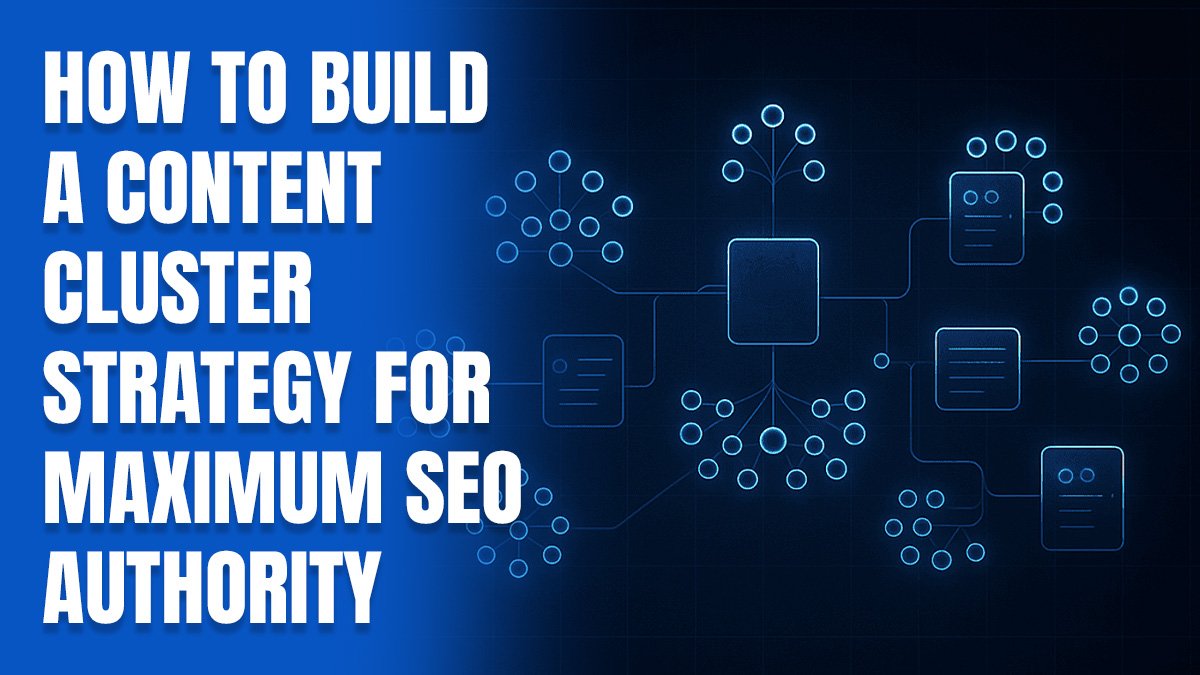
How to Build a Content Cluster Strategy for Maximum SEO Authority
Introduction
One of the most powerful modern SEO strategies is the Content Cluster Strategy. Instead of publishing random, disconnected posts, you build a network of related content around a central topic. This approach signals deep expertise to Google, improves internal linking, and helps all the connected pages rank better. Here’s how to build an effective Content Cluster Strategy for your website.
What Is a Content Cluster
A content cluster consists of one comprehensive ‘pillar page’ that covers a broad topic, surrounded by multiple ‘cluster posts’ that dive deep into specific subtopics — all linked back to the pillar. For example: a pillar post on ‘Complete Guide to SEO’ supported by clusters on keyword research, on-page SEO, link building, technical SEO, and so on.
Why Content Clusters Boost SEO
Content clusters work because they demonstrate topical authority. Google rewards websites that comprehensively cover a subject. When you have 10 interconnected posts all about SEO fundamentals, Google recognises you as an authority on that topic — more so than a site with one generic SEO post. The internal linking also distributes page authority across all cluster pages. To learn more about Content Marketing and How It Drives Business Growth, read this article https://thesocialspot.in/what-is-content-marketing-and-how-does-it-drive-business-growth/
Step 1: Choose Your Pillar Topics
Select 2-5 broad topics that are central to your niche. Each topic should be broad enough to generate at least 10 cluster post ideas. For a digital marketing blog: SEO, Social Media Marketing, Email Marketing, Google Ads, and Content Marketing could each be a pillar topic.
Step 2: Build Out Your Cluster Posts
For each pillar topic, brainstorm 8-15 specific subtopics that could each be their own post. For SEO: keyword research, on-page SEO, link building, technical SEO, local SEO, Google Search Console, and so on. Each subtopic becomes a 1,000-2,000 word post that links back to the pillar page and to related cluster posts.
Step 3: Implement Strategic Internal Linking
Once all cluster posts are published, link generously between them. Every cluster post should link to the pillar. The pillar should link to all cluster posts. Related cluster posts should link to each other where relevant. This interconnected structure helps Google understand the relationships between your content and crawl your site more efficiently.

Ann Rachal is a results-driven Digital Marketer and SEO Blogger who specializes in helping bloggers and small businesses grow their online presence. With a strong focus on ethical SEO strategies, data-driven insights, and the latest digital marketing trends, she empowers brands to achieve sustainable growth and visibility.