
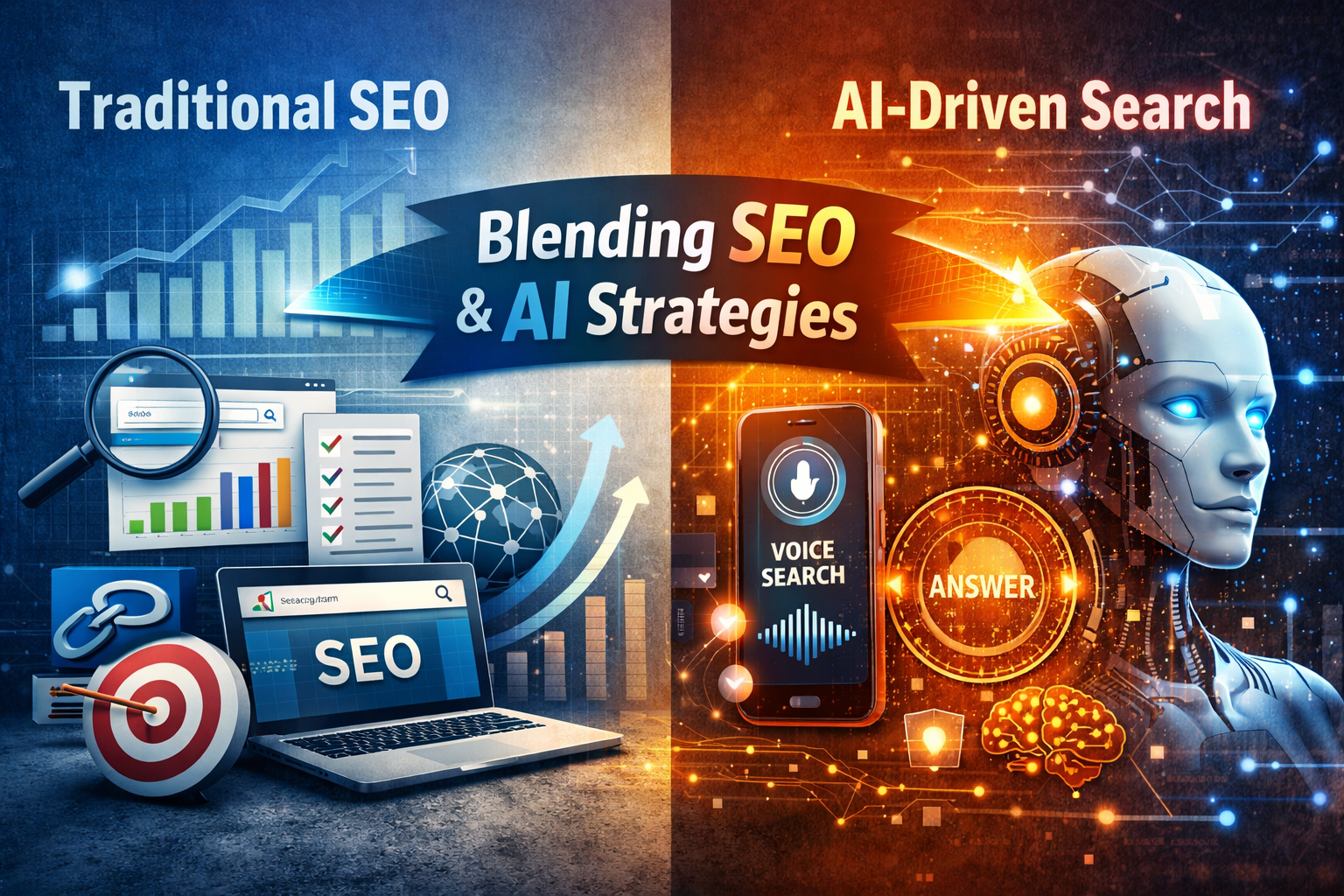
How to Blend Traditional SEO with AI-Driven Search Strategies
Search behavior is rapidly evolving as AI-driven search engines, voice assistants, and answer engines reshape how users discover information online. While artificial intelligence is changing the search landscape, traditional SEO remains the foundation of online visibility. The key to sustainable growth in 2025 and beyond lies in blending proven SEO techniques with modern AI-driven search strategies.
Traditional SEO focuses on keyword research, on-page optimization, quality backlinks, technical performance, and user experience. These elements are still critical for helping search engines crawl, index, and rank web pages effectively. However, AI-powered search platforms now prioritize context, intent, and direct answers rather than just keyword matches. This shift requires content creators to optimize for both search engines and AI answer systems simultaneously.
To successfully merge SEO and AI-driven strategies, content must be structured, informative, and intent-focused. Writing clear, concise answers to common user questions helps improve visibility in featured snippets, voice search results, and AI-generated responses. Using schema markup and structured data enhances content understanding, enabling search engines and AI tools to extract accurate information quickly.
Another important factor is topical authority. Instead of targeting isolated keywords, creating comprehensive topic clusters helps AI algorithms recognize expertise and relevance. High-quality content supported by internal linking, fast page speed, mobile optimization, and strong Core Web Vitals ensures a seamless user experience—an essential ranking signal for both traditional and AI-driven search.
By aligning keyword-based SEO with conversational content, semantic search optimization, and AI-friendly formatting, businesses can maintain strong SERP rankings while gaining visibility in zero-click searches and AI answer engines. Blending traditional SEO with AI-driven search strategies is no longer optional—it is essential for long-term digital success.
